
What Happens When You Actually Unplug for a Full Weekend
On a Friday evening in March, I put my phone in a drawer, closed my laptop, and took off my smartwatch. I told three people I’d be unreachable until Sunday night. Then I sat on my couch and immediately had no idea what to do with my hands.
This isn’t another article telling you to do a digital detox. There’s already a solid guide for that. This is what actually happened when I tried it — the uncomfortable parts, the boring parts, and the few genuinely surprising moments that made me rethink how I spend my connected hours.
Friday Night: The Phantom Buzzing Starts Immediately
Within the first hour, I felt my phone vibrate in my pocket three times. My phone was in a drawer in the next room. There was nothing in my pocket.
Phantom vibrations. I’d read about them but never noticed them because — well, I always have my phone. The sensation is so familiar that it blends into the background when your phone is actually there. Remove the phone and suddenly you feel the ghost of it, like an amputated limb sending signals to a brain that hasn’t gotten the memo.
I reached for my pocket seventeen times that first evening. I counted, because I had nothing else to do. By the third hour, the reaching slowed. By bedtime, it had mostly stopped. But the urge to check — that took longer.
The hardest moment came around 9 PM. I finished dinner, cleaned up, and hit the transition gap. That window between “done with dinner” and “going to bed” is normally filled with my phone. An hour or two of scrolling, some messages, maybe a YouTube video. Without it, the gap felt enormous. An entire empty evening stretched out in front of me with nothing to fill it.
I picked up a book. Read about thirty pages — more than I’d read in any single sitting in months. Then I just sat there. Not meditating. Not doing anything mindful or intentional. Just sitting in a quiet apartment, staring at the wall, feeling slightly ridiculous.
Saturday Morning: Time Moves Differently
I woke up without an alarm, which I expected. What I didn’t expect was the quality of the sleep. I’d gone to bed without any screen time at all — no “just checking one last thing,” no blue light, no late-night rabbit hole that pushes bedtime from 11 to 12:30. I fell asleep faster than I could remember and woke up feeling rested in a way that seemed disproportionate to the hours I’d slept.
Saturday morning moved slowly. Not unpleasantly — just slowly. Normally my mornings are compressed. I pick up the phone while still in bed, check messages, scroll news, and suddenly it’s 9:30 and I’ve been lying there for forty minutes but feel like no time has passed. This Saturday morning, I was up and making coffee by 7:15. The morning felt long. I made breakfast. Ate it slowly. Watched the light change through the window. All of this took what felt like an enormous amount of time but was probably two hours.
Here’s the thing about time and phones: screens compress time. You pick up your phone for “a quick check” and thirty minutes vanish. You feel busy, stimulated, occupied — but the clock jumps. Without the phone, time expanded back to its actual pace. An hour felt like an hour. It was disorienting at first, then kind of beautiful.
The Boredom Was Real (And Useful)
Let me be honest: parts of Saturday were boring. Not peaceful-boring, not productive-boring. Just boring. I reorganized a bookshelf. I stared at the ceiling. I walked to the kitchen, opened the fridge, closed the fridge, walked back. Classic restless energy with nowhere to go.
Around 11 AM I had a strong impulse to “just quickly check” something. Not anything specific — I couldn’t even name what I wanted to check. The pull was toward the act of checking itself. Swiping, scrolling, the small dopamine hit of new information. My brain wanted stimulation and it knew exactly where to find it.
I sat with the boredom instead. Not because I’m disciplined, but because the phone was locked away and I didn’t want to break the experiment on day one. And something shifted around the twenty-minute mark. The restlessness faded. In its place came a kind of calm emptiness that I genuinely hadn’t felt in years. Not relaxation exactly — more like my brain downshifting into a gear I’d forgotten existed.
This is what the research calls the “boredom bridge.” Your brain resists understimulation hard at first — it’s used to on-demand dopamine. Push through that resistance, and your baseline resets. You stop needing constant input to feel okay. The bridge takes about fifteen to thirty minutes, and most of us never cross it because we reach for the phone at minute two.
What Came Back
By Saturday afternoon, things started happening that I can only describe as my brain waking up from a nap it didn’t know it was taking.
I had a conversation with my neighbor that lasted forty-five minutes. We’ve lived next to each other for two years and I don’t think we’d ever talked for more than five. She told me about her mother’s garden in Portugal, about how she grows tomatoes on her balcony that never taste the same. I noticed details — the way she gestured when she was excited, the specific shade of green on her balcony plants. I was fully present because there was literally nothing competing for my attention.
I had three ideas for a project I’d been stuck on for weeks. They came while I was doing nothing — walking back from the supermarket, folding laundry, sitting on a bench in the park. The ideas weren’t revolutionary, but they were clear. My brain had space to work on background problems because it wasn’t constantly being interrupted by foreground noise.
I noticed things. The sound of birds at 6 AM that I sleep through when I stay up scrolling until midnight. A crack in my ceiling I’d never seen. The specific way late afternoon light hits my kitchen floor. None of this matters in any productive sense. But all of it made me feel more present in my own apartment than I had in months.
What Was Genuinely Hard
I’m not going to pretend it was all birds and epiphanies. Some parts were legitimately difficult.
Logistics without a phone are a mess. I wanted to meet a friend on Saturday evening and realized I had no way to coordinate. We’d made a vague plan earlier in the week — “Saturday evening, somewhere in the neighborhood” — but the specifics required texting. I ended up walking to her apartment and ringing the doorbell like it was 1997. She thought something was wrong.
FOMO hit harder than expected. A group chat I’m part of was organizing a Sunday brunch. I found out Monday morning. I wasn’t upset about missing brunch — I was upset about not knowing it was happening. The feeling of events occurring without your awareness is surprisingly uncomfortable when you’re used to real-time updates on everything.
Sunday afternoon was the toughest stretch. The novelty of being offline had worn off. The boredom bridge didn’t need crossing anymore — I was past it. But what replaced it wasn’t calm; it was a low-grade restlessness. I wanted stimulation. Not urgently, but persistently. Like being mildly hungry all day. I went for two walks, read more of my book, cooked an unnecessarily complicated dinner. All fine activities. None of them fully scratched the itch.
I worried about things I couldn’t check. Did that email come in? Did someone need me? Is something happening in the world I should know about? This background anxiety was subtle but constant. Like leaving the house and not being sure you locked the door — except the door is every possible information source simultaneously.
The Re-Entry
Sunday at 8 PM I opened the drawer. Picked up the phone. Turned it on.
Forty-seven notifications. I scanned them in about ninety seconds. Almost nothing was urgent. Two messages that mattered, a handful of social media notifications that I’d normally spend thirty minutes engaging with but now seemed obviously unimportant. The group brunch I missed. Three news alerts about things I could have lived without knowing about for another week.
The ratio of noise to signal was maybe 50:1. Forty-eight hours of accumulation, and the genuinely relevant information could fit in a text message.
That was the most useful takeaway. Not that phones are bad. Not that we should all go offline more. But that the constant stream of input creates an illusion of importance. Most of it isn’t important. The urgency is manufactured by the medium, not the content.
What I Changed Afterward
I didn’t become one of those people who does a phone-free weekend every month. I tried. Made it two more times before life logistics made it impractical.
But I did change some things permanently. I stopped bringing my phone to the dinner table. I put it in another room during the first hour after waking up. I started going for walks without it — just twenty minutes around the block with nothing but my thoughts and the sounds of the street.
Small things. But the weekend showed me something I couldn’t unsee: the version of my brain that exists without constant input is quieter, more creative, and more present than the version that’s perpetually half-attending to a screen. I liked that version. I wanted more access to it without having to lock my phone in a drawer.
I started using short focus sessions during the day to create mini-versions of that offline state. Even thirty minutes of phone-free focus creates a tiny version of the boredom bridge effect — your brain downshifts, the noise fades, and you get some of that clarity back. It’s not the same as 48 hours offline. But it’s accessible on a Tuesday afternoon, which the full weekend isn’t.
Would I Do It Again?
Yes. But I’d plan better.
Tell more people. Coordinate weekend plans in advance. Buy a physical alarm clock. Have a meal plan so you’re not standing in a grocery store trying to remember a recipe without being able to search for it.
And I’d do it in summer. The long daylight hours make the time feel less empty. March evenings get dark early, and sitting in a quiet apartment at 6 PM with nothing to do and four hours until bedtime requires more tolerance for stillness than I had.
The weekend didn’t change my life. I still use my phone too much. I still scroll when I’m bored. But somewhere in my memory there’s now a reference point — a 48-hour snapshot of what my mind feels like when it’s not being constantly fed. I can’t unfeel that. And on the days when the noise gets too loud, I remember: it’s optional. All of it is optional. You can just put the phone in a drawer and sit there.
It’s uncomfortable for about twenty minutes. Then it’s something else entirely.
Frequently Asked Questions
Do I need to go fully offline, or can I keep my phone for emergencies?
You can keep it for emergencies — but be honest about what constitutes one. “What if someone needs me?” isn’t an emergency plan; it’s anxiety wearing a responsible disguise. If you need a safety net, tell two or three people how to reach you through a non-smartphone method (a landline, a partner’s phone, a neighbor). The point is removing the habitual access, not cutting yourself off from humanity.
What should I do about maps, payments, and other practical phone needs?
This was my biggest logistical headache. For maps, I looked up routes beforehand and wrote them down. Payments — I brought a physical wallet and cash. Music — I don’t own a record player, so I had silence, which was arguably the point. If you rely on your phone for medication reminders or health monitoring, keep that functionality available. The goal is breaking the scroll-and-check habit, not endangering yourself.
How is this different from a regular digital detox?
Most digital detox guides give you a structured plan with rules and replacement activities. This was unstructured — no plan, no schedule, no self-improvement agenda. Just removal and observation. The value was in seeing what my brain does when I stop managing it. A detox is something you do to yourself. This was more like watching what happens when you stop doing.
I tracked my screen time before and it was bad — will unplugging fix that?
Tracking screen time shows you the problem. Unplugging shows you the alternative. They’re complementary. The weekend didn’t “fix” my screen time — I went right back to my normal patterns within a few days. But it gave me a visceral reference point for what life feels like without the noise. That memory is surprisingly motivating when you’re deciding whether to pick up the phone for the tenth time in an hour.
What if I try this and I’m just bored the whole time?
You probably will be, at least for the first several hours. That’s the point. Boredom is your brain recalibrating — it’s used to on-demand stimulation and it takes time to adjust. The interesting stuff (clearer thinking, longer attention span, noticing more around you) usually starts after you’ve pushed through the initial restlessness. Give it at least a full day before judging the experience. The first twelve hours are withdrawal. The second twelve are where it gets interesting.
Starve distractions. Feed your focus!
Join 42.923 happy users around the world in becoming less distracted.
Download Focus Dog on the Apple App Store Download Focus Dog on the Google Play Store

A Digital Detox Guide - Unplug and Reconnect with Real Life
Explore digital detox, uncover its impact on mental health, relationships, and overall well-being.
Read more
What 10,000 Hours of Focus Data Taught Me About Myself
Years of tracking my focus time revealed surprising patterns about productivity, seasons, and self-knowledge. Here's what the data mirror showed me.
Read more
The Struggle with ADHD and Smartphones
Explore how dopamine hooks can have a positive impact on attention management and focus for individuals grappling with ADHD.
Read more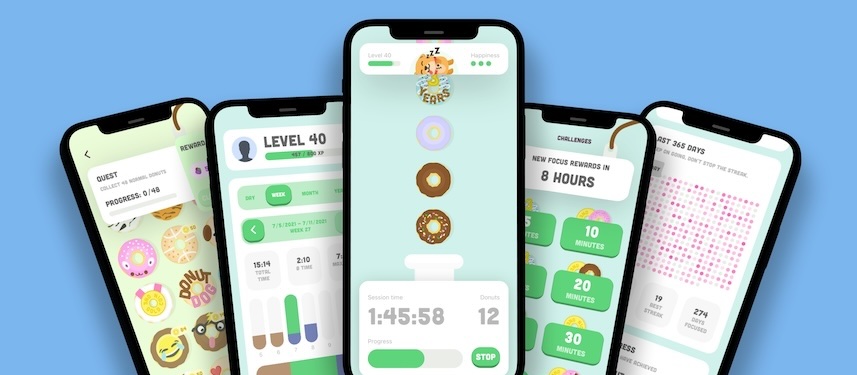
The Power of Habit-Tracking: How Focus Dog App Can Build Positive Routines
Learn how Focus Dog empowers users to establish and maintain positive habits for personal and professional growth in an engaging and rewarding manner.
Read moreMore from the Digital Harmony Magazine
Discover Engaging Insights on Cultivating a Balanced Connection Between Your Phone and Mind while Boosting Productivity through Gamification!
Discover the Digital Harmony Magazine